
What Is a Healthy Body Fat Percentage? (It's Not What Most People Think)
The ranges associated with health risk and the ranges associated with aesthetics are not the same thing. Here's what the research actually says about healthy body fat levels, how to measure yours at home, and why lower is not always better.
The body fat percentage that looks best in a mirror and the body fat percentage that keeps you healthiest are two different numbers, and almost nobody tells you that. Chase the magazine-cover figure and you can sail straight past healthy into a range that disrupts your hormones, your sleep, and your immune system. A healthy body fat percentage is a band, not a finish line, and the band sits higher than the fitness industry wants you to believe. Here's where it actually is, and why lower is not the prize.
Fat is not a flaw your body is trying to overcome. Your brain is roughly 60% fat. Your hormones are built from it. Drop too low and the machinery starts to fail. So the real question is never "how do I get rid of it." It's "how much do I keep, and where." Let's answer that with numbers you can act on.
Health Ranges and Aesthetic Ranges Are Not the Same Thing
The single biggest source of confusion in this topic is mixing two different goals. One is health: the range linked to the lowest disease risk and normal hormonal function. The other is appearance: the lower range where muscle definition becomes visible. They overlap, but they are not identical, and the aesthetic range sits below the health range for most people.
You can be too lean for health and still not "ripped" enough for a photo shoot. That tension is why so many people feel they're failing when their body is actually fine. Once you separate the two goals, the target stops being a single scary number and becomes a sensible range you can live in year-round.
The Actual Healthy Ranges
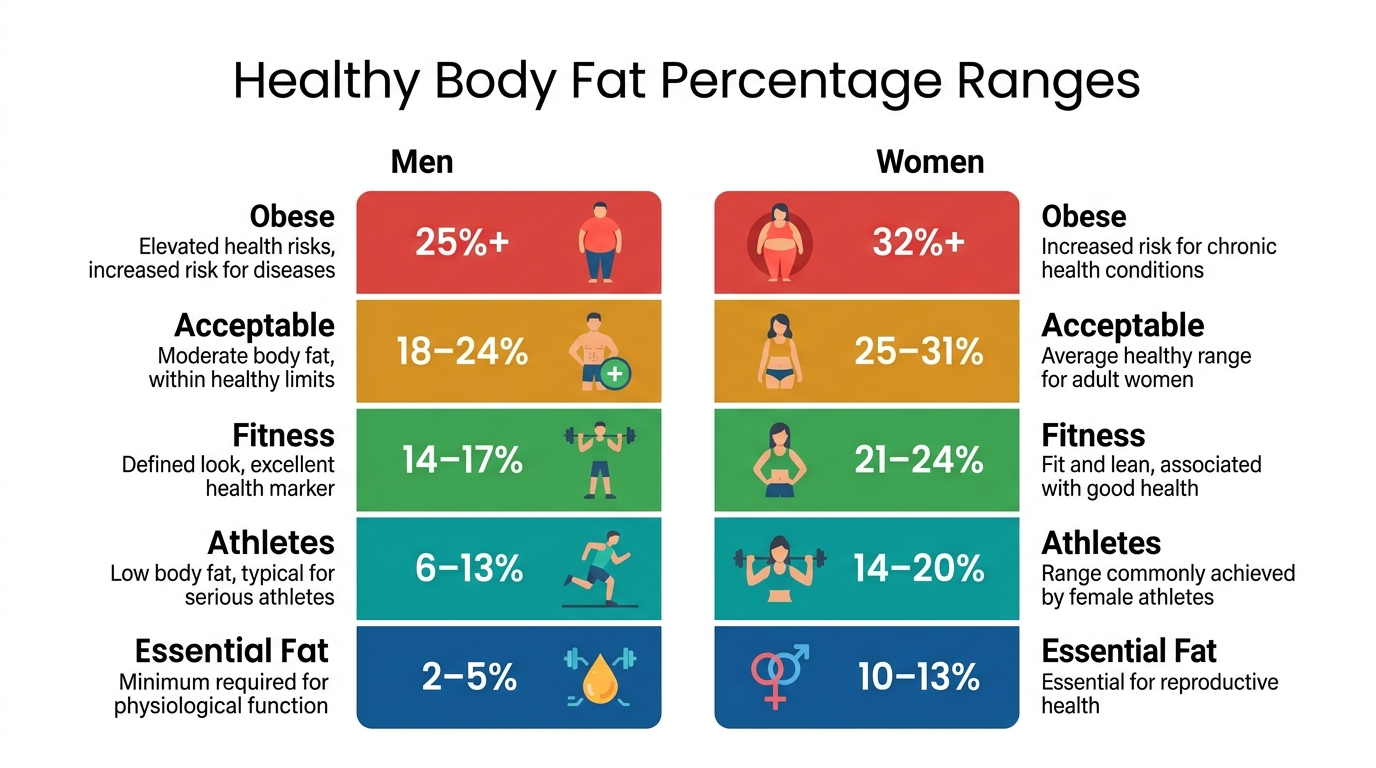
These ranges come from the American Council on Exercise classifications, the most widely cited clinical benchmarks. Women carry more essential fat than men for reproductive reasons, so the bands differ by sex. Read the "what it means" column rather than just the number.
| Category | Men | Women | What it means |
|---|---|---|---|
| Essential | 2 to 5% | 10 to 13% | A floor, not a goal. Going below harms function. |
| Athlete | 6 to 13% | 14 to 20% | Visible definition. Hard to hold year-round. |
| Fitness | 14 to 17% | 21 to 24% | Lean, healthy, sustainable. A great target. |
| Acceptable | 18 to 24% | 25 to 31% | Still healthy for most people. No alarm here. |
| Above range | 25%+ | 32%+ | Rising metabolic risk, worth addressing. |
Notice that the "fitness" and "acceptable" bands are both healthy. For most people, anywhere in that combined zone is a win. Find your own number on the body fat percentage calculator and locate which row you're in before deciding anything needs to change.
Why Lower Is Not Always Better
Body fat and health do not follow a straight line where less is always better. They follow a U-shaped curve. Risk is high at the top end, drops through the healthy middle, and then climbs again at the very bottom. The bottom of that curve is real and it is where over-dieters and extreme athletes get hurt.
In women, dropping below roughly 12% body fat commonly disrupts the menstrual cycle, weakens bones, and suppresses immune function. In men, chronically low body fat drives testosterone down, drags energy with it, and damages sleep. The "essential" band in the table is the physiological floor, the amount your organs need to keep running. Treating it as a target rather than a limit is how lean turns into unwell.
The healthiest move for most people is to aim for the fitness or acceptable band and stay there comfortably, rather than grinding toward a single-digit number that the body fights to defend. A stable healthy range beats an unstable extreme every time.
Why Men and Women Have Different Ranges
The gap between the male and female ranges isn't arbitrary, and it isn't about fitness. Women carry more essential fat than men for biological reasons tied to reproduction. The body stores fat to support a potential pregnancy and to maintain the hormones that regulate the menstrual cycle, which is why a healthy woman naturally sits several points higher than a healthy man at the same fitness level.
This is why comparing yourself to the opposite sex is a recipe for a bad target. A woman at 24% body fat is lean and athletic; a man at 24% is in the acceptable but unremarkable range. If a woman chases a man's "fitness" number of 15%, she's heading toward a level that can shut down her cycle and harm her bones. The ranges look different on the chart because the underlying biology genuinely is different, and treating them as interchangeable is one of the most common mistakes people make.
How Your Healthy Target Shifts With Age
Body fat percentage that's healthy at 25 is not the same as what's healthy at 55. Body composition naturally changes with age: muscle mass slowly declines, and fat tends to increase even when weight stays the same. A modest upward drift in body fat across the decades is normal and not a failure of discipline.
Most reference ranges add a few percentage points of acceptable body fat for each decade past 40. Chasing the exact number you held in your twenties can mean fighting your own physiology, often at the cost of the muscle you most need to preserve as you age. A more useful goal for an older adult is holding the line: maintaining muscle through resistance training and keeping fat from climbing steadily, rather than driving the percentage down to a youthful figure that no longer fits your body.
Why Where Your Fat Sits Matters as Much as How Much
Two people can share an identical body fat percentage and carry very different health risk, because of where the fat is stored. Subcutaneous fat sits under the skin, the soft layer you can pinch. Visceral fat sits deep in the abdomen, packed around the organs, and it's the metabolically active kind that drives heart disease, insulin resistance, and inflammation.
This is the difference between "apple" and "pear" body shapes. Fat carried around the middle is more dangerous than the same amount carried on the hips and thighs. It's also why your waist measurement adds so much to a body fat reading. A quick check on the waist-to-hip ratio calculator tells you whether your fat is sitting in the higher-risk zone, which a single body fat percentage alone can't reveal. Two numbers together, total fat and where it sits, describe your risk far better than either does alone.
How to Measure Yours Without a Lab
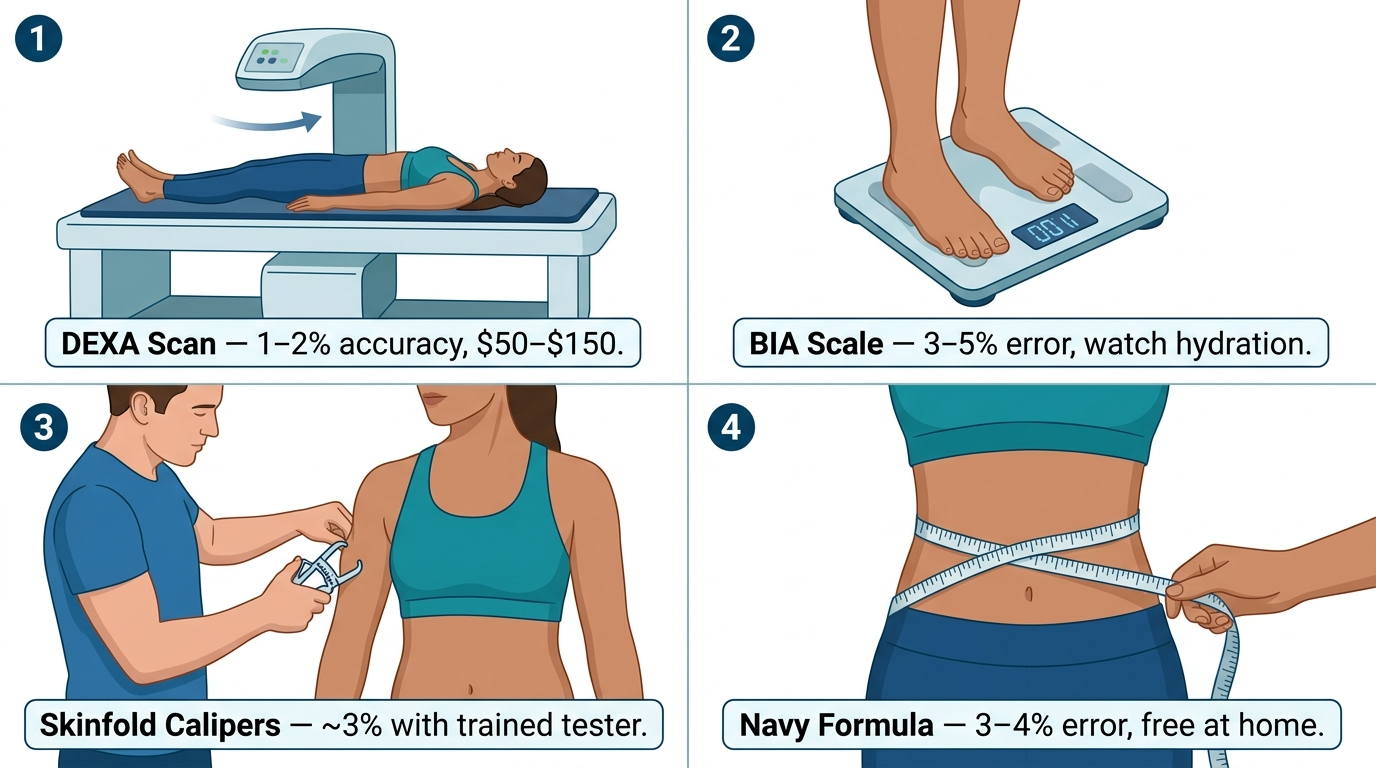
You don't need a DEXA scan to get a usable number. A few home methods land close enough to guide decisions, as long as you measure the same way each time so your trend is consistent.
- Tape measure (Navy method): free, needs only neck, waist, and hip measurements, and is the most accessible accurate option.
- Smart scale: convenient and good for tracking direction over weeks, though it swings with hydration, so weigh at the same time of day.
- Skinfold calipers: inexpensive and reliable when the same person takes the readings each time.
Pair whichever you choose with a lean body mass figure so you know how much muscle you're carrying underneath the fat. The lean body mass calculator turns your weight and body fat into the muscle-and-bone number that matters when you're trying to lose fat without losing strength. Adding a quick check on the waist-to-hip ratio calculator tells you whether your fat is sitting in the higher-risk midsection.
How to Change Your Number Without Wrecking Your Health
If you do sit above the healthy range and want to come down, the method matters as much as the goal. Crash dieting drops the scale fast but burns muscle alongside fat, which lowers the very metabolism you need for the result to last. The slower path keeps the muscle and the metabolism intact.
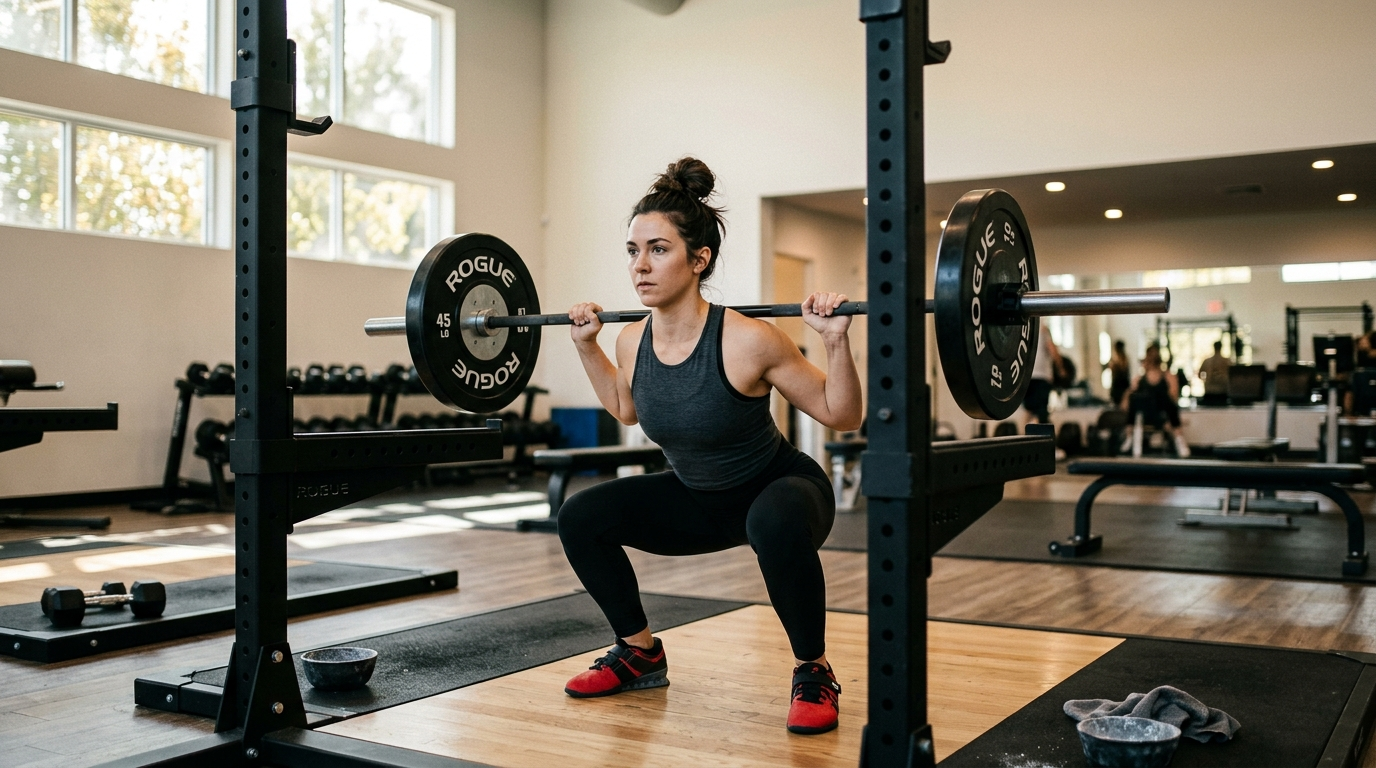
The approach that works is body recomposition: a modest calorie deficit of 300 to 500 below maintenance, protein around 0.7 to 1.0 grams per pound of body weight, and two to three resistance sessions a week. That combination strips fat while protecting lean mass, which is exactly what moves you down the healthy bands without sending you below the floor.
This is also where the built-in AI assistant on the calculator pages earns its place. After you get your body fat number, you can ask it something specific like "I'm a woman at 30% body fat, what's a realistic and safe target and how long should it take," and it frames a sensible range and pace instead of leaving you to copy an extreme number off social media. Compare your body fat against your BMI result too, and treat the healthy range as a place to settle, not a number to beat.
Frequently Asked Questions
What is a healthy body fat percentage for men and women?
For men, the fitness range is 14 to 17% and the acceptable range is 18 to 24%. For women, the fitness range is 21 to 24% and the acceptable range is 25 to 31%. Athletes typically fall in the 6 to 13% range for men and 14 to 20% for women. These ranges come from American Council on Exercise guidelines and are the most widely cited clinical benchmarks.
How do I measure my body fat percentage at home?
The most accessible home methods are the Navy circumference formula (uses waist, neck, and hip measurements with a tape measure), bioelectrical impedance scales (margin of error 3 to 5%), and skinfold calipers administered by a trained technician. DEXA scanning at a clinic provides the most accurate result, typically within 1 to 2%, at a cost of $50 to $150.
Is lower body fat percentage always healthier?
No. Very low body fat is harmful. In women, below 10 to 12% body fat disrupts hormonal function and can cause amenorrhea, bone density loss, and reduced immune function. In men, chronically low body fat suppresses testosterone production. The essential fat range (2 to 5% for men, 10 to 13% for women) is a physiological floor, not a health goal.
What is the difference between body fat percentage and BMI?
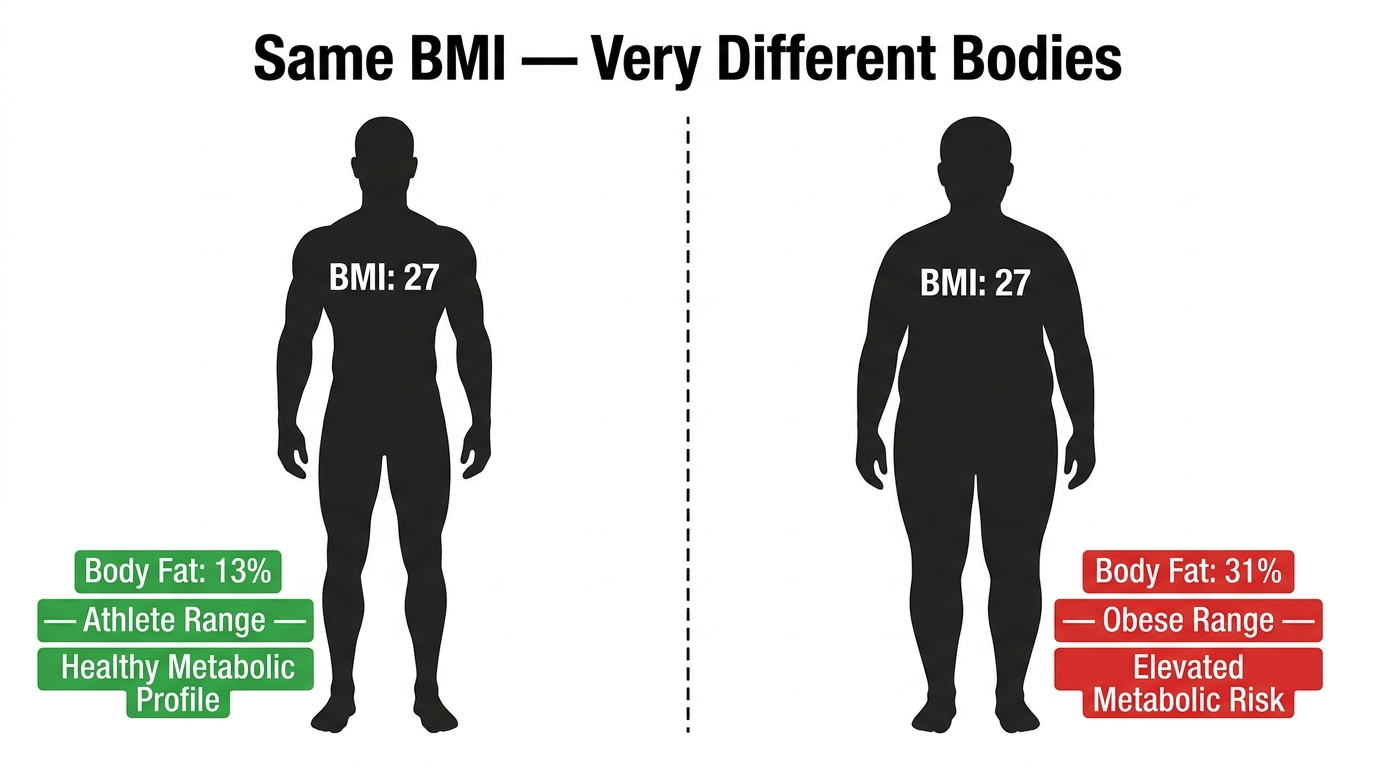
Body fat percentage directly measures the proportion of your weight made up of fat tissue. BMI measures a height-to-weight ratio and infers fat levels from population statistics without distinguishing between fat and muscle. A muscular person can have a BMI in the overweight range with very low body fat. Body fat percentage is the more informative measure for individuals.
How can I lower my body fat percentage without losing muscle?
The most effective approach is body recomposition: combine resistance training (2 to 3 sessions per week) with a modest calorie deficit of 300 to 500 calories per day and adequate protein intake of 0.7 to 1.0 grams per pound of body weight. Aggressive calorie deficits accelerate muscle loss. Slow, consistent reduction in body fat while preserving lean mass produces better long-term results.