
What Is a Good GPA? The Complete Breakdown by School, Career, and Goal
A 3.5 GPA means something very different depending on whether you're applying to medical school, a Fortune 500 job, or a graduate program. Here's the full breakdown with real thresholds.

A 3.5 GPA can be outstanding or merely average depending entirely on what you're trying to do with it. For one student it's a golden ticket; for another applying to medical school, it's below the cutoff. That's the thing nobody tells you about a "good GPA": the number alone is meaningless without context. What counts as good depends on your school, your career path, and your specific goal, and once you see the real thresholds, you can stop guessing whether your GPA is good enough and know exactly where you stand.
The 4.0 scale gives a comforting illusion of a single standard, but a GPA only has meaning relative to what it's being measured against. A number that opens every door for one goal quietly closes them for another. Let's replace the vague worry with the actual benchmarks that matter.
"Good" Depends Entirely on Context
The reason there's no universal "good GPA" is that different goals measure it against different bars. An employer for a general role, a competitive graduate program, and a medical school admissions committee are looking for completely different things from the same transcript. A GPA that's excellent for one is disqualifying for another.
The right question is never "is my GPA good," but "is my GPA good for what I want to do." That reframing turns an anxious, abstract worry into a concrete, answerable question. Once you know your target, you can measure your number against the bar that actually applies, and ignore all the others that don't.
The GPA Scale and What Each Range Signals
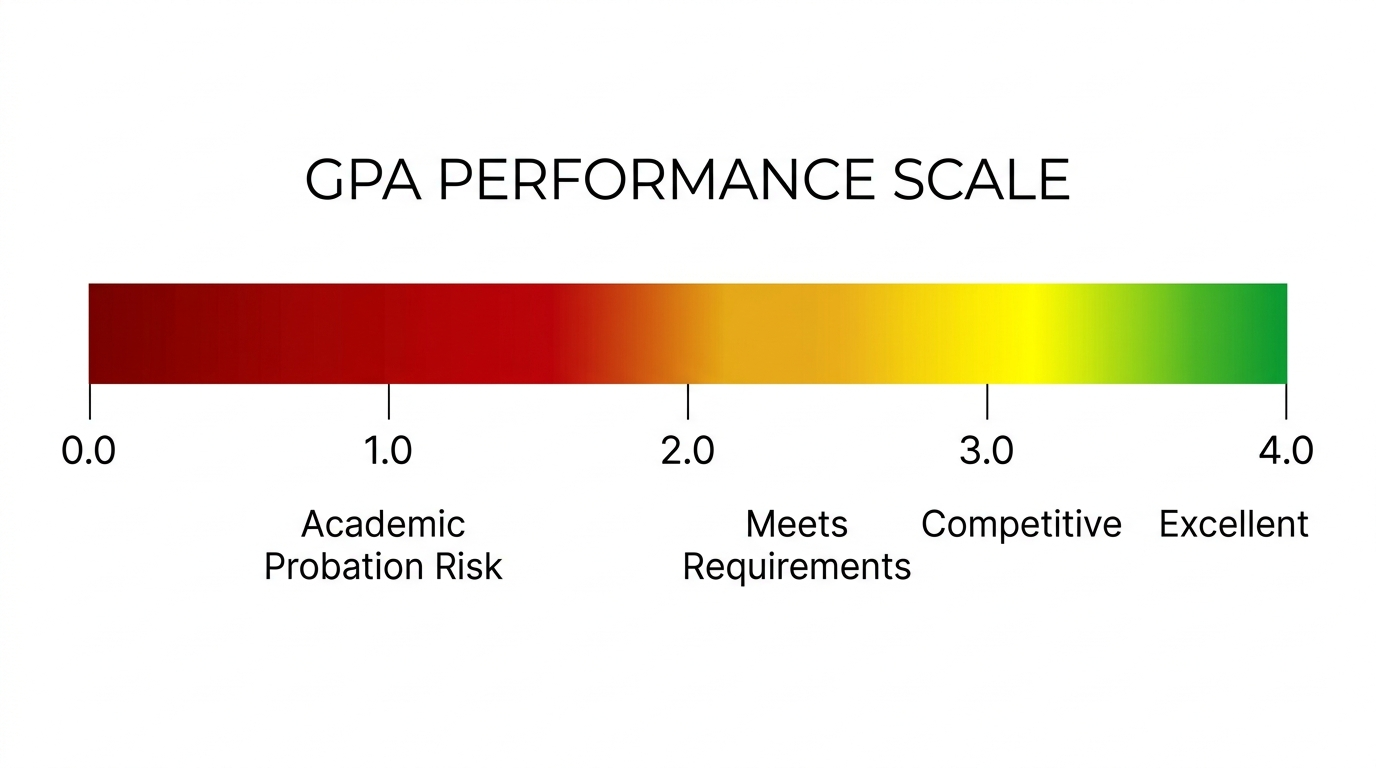
On the standard unweighted 4.0 scale, the ranges carry rough general meaning before any specific goal enters the picture. A 3.7 and above is honors territory, signaling consistent excellence. A 3.5 to 3.7 is strong and competitive for most purposes. A 3.0 to 3.5 is solid and meets most standard requirements. A 2.0 to 3.0 keeps you in good standing but limits competitive options, and below 2.0 typically risks academic probation.
These bands are the backdrop, not the verdict. A 3.4 might be perfectly strong for a general business career and simultaneously a real obstacle for a top PhD program. Calculate exactly where you stand with the GPA calculator, then read your number against your actual goal rather than this general scale.
GPA Thresholds by Goal
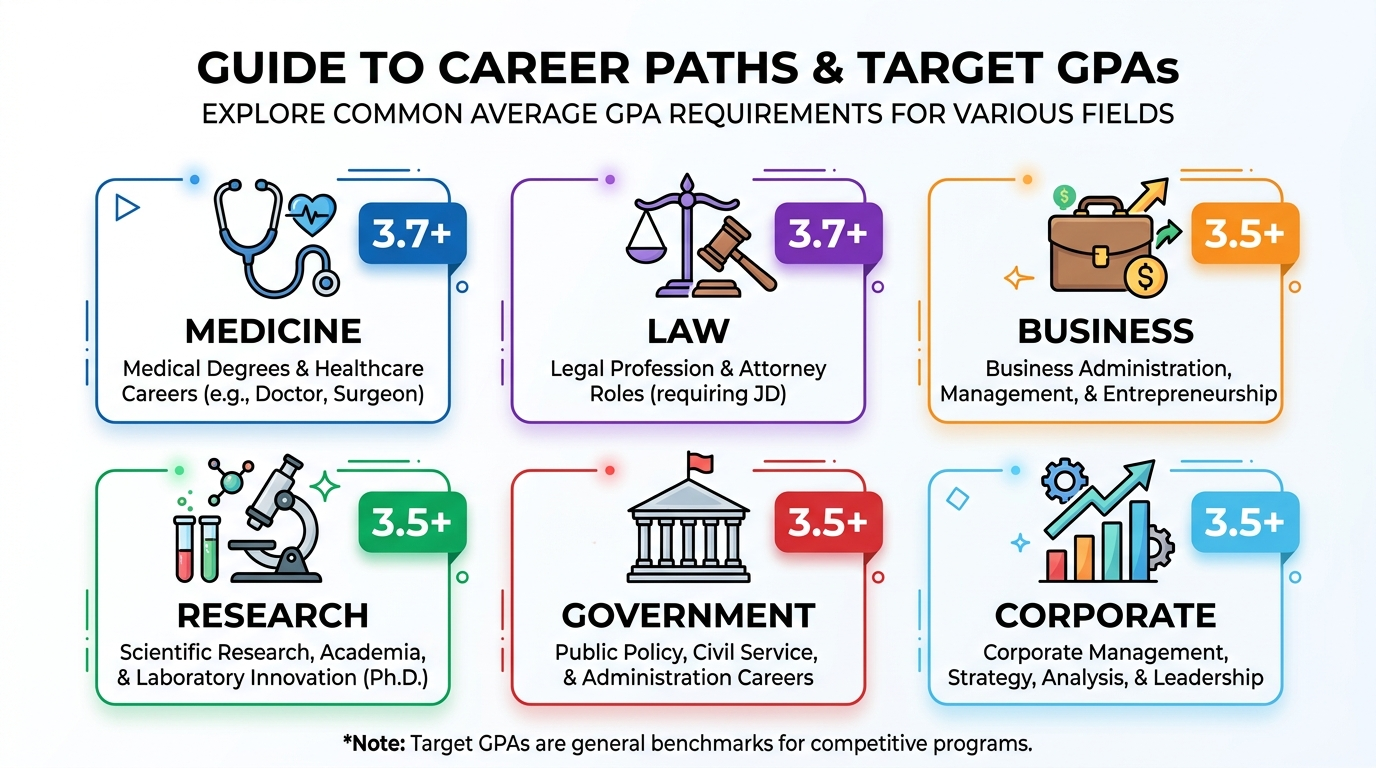
Here is where vague becomes concrete. These are the approximate GPA bars that different paths actually use, so you can find yours and see the real target.
| Goal | Competitive GPA |
|---|---|
| Medical school (MD) | 3.7+ |
| Top law school / MBA | 3.5+ |
| Most master's programs | 3.0 to 3.5 |
| Banking / consulting roles | 3.5+ |
| Honors / cum laude | 3.5 to 3.7+ |
| Good academic standing | 2.0+ |
Notice the spread. A 3.4 clears "most master's programs" comfortably while falling short of medical school. The same number is simultaneously good and not good, depending only on which row you're aiming at. Find your row, and your answer is right there.
Do Employers Actually Care?
For students worried about jobs, the honest answer has two parts. Early on, some employers care a lot. Investment banks, consulting firms, and certain competitive tech and finance roles often set a 3.5 minimum for new graduates and will screen applications on it. For those paths, GPA in your first job hunt is a real gate.
But the relevance fades fast. After three to five years of work experience, the large majority of employers stop asking about GPA entirely and focus on what you've actually accomplished professionally. Your transcript becomes irrelevant the moment you have a track record. So a GPA matters most in a narrow early window for specific fields, and barely at all after that, which is worth keeping in perspective if your number isn't where you'd like it to be.
How to Raise a Low GPA
If your GPA is below your target, it's more fixable than it feels, especially earlier in your studies. The most effective moves are concrete. Retake courses where your school allows grade replacement, which can erase a low grade outright. Earn strong grades in your remaining coursework, since each new A pulls the average up.
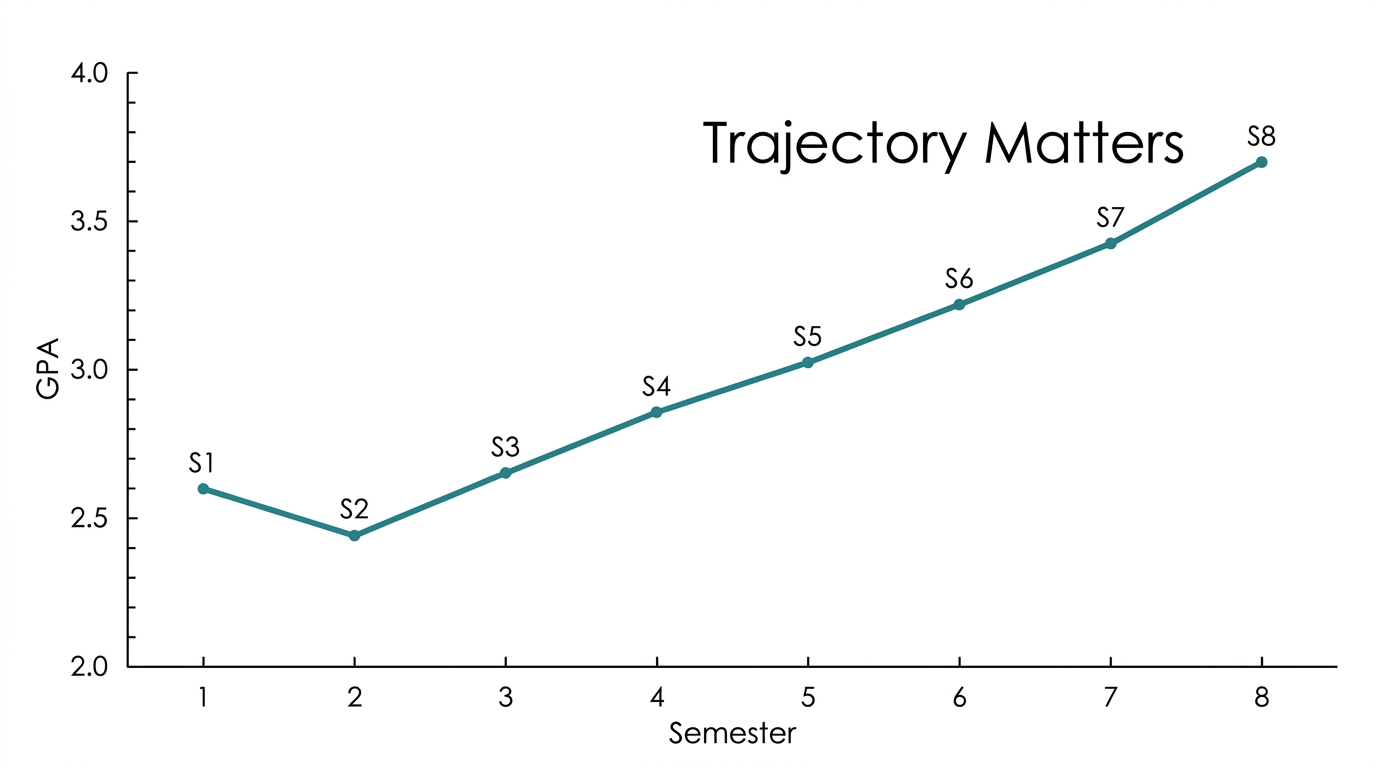
Focus also helps: many programs weigh your last 60 credits or your major GPA separately, so a strong upward trend in your junior and senior years is recognized by admissions committees even if your early grades were rough. A rising trajectory tells a better story than a flat mediocre one. Model how a target semester would move your number with the grade calculator, and if you're a high schooler eyeing college, the SAT score calculator helps you see how testing can offset a borderline GPA.
Why the Trend Matters More Than the Number
One thing a single GPA figure hides is direction, and direction often matters as much as the number itself. A student who started with a rough first year and climbed steadily to strong grades tells a very different story than one who began strong and slid. Admissions committees and even some employers read that trajectory, not just the final average.
This is genuinely good news if your early grades dragged your GPA down. A clear upward trend signals growth, resilience, and increasing capability, qualities that a flat, mediocre transcript doesn't show. Many programs explicitly value an improving record, and some weigh your later coursework more heavily for exactly this reason. So if your cumulative number looks lower than you'd like, the fix isn't despair; it's a strong, visible climb from here. The most recent grades carry the most weight in the story you're telling.
It also reframes how to think about a single bad semester. One rough term inside a rising or consistently strong record barely registers. The same grade as part of a downward slide raises questions. Context turns the same number into different stories, which is why a trend line is worth more than any one snapshot, and why it's never too late in your studies to change the direction of yours.
Calculate and Track Yours
The path out of GPA anxiety is specificity. Calculate your real number, identify the exact target your goal requires, and measure the gap. A clear gap is a plan; a vague worry is just stress. Most students discover they're closer to, or further from, their target than they feared, and either way the clarity is useful.
This is a natural fit for the built-in AI assistant on the calculator pages. Tell it something like "I have a 3.3 and want to apply to med school, what do I need to do," and it puts your number against the real threshold and suggests a path instead of leaving you to guess. And if you're weighing the cost of more schooling against the GPA you'd need, the college cost calculator adds the financial side of the decision. A good GPA isn't a single magic number. It's whatever opens the specific door you're walking toward.
Frequently Asked Questions
What GPA is considered good?
A GPA of 3.0 or above meets most standard requirements and is generally considered good. A 3.5 or above is considered excellent and competitive for most graduate programs and employers. A 3.7 or above puts you in honors territory.
What GPA do you need for medical school?
Most MD programs accept students with an average GPA of 3.7 or higher. The minimum competitive GPA is typically 3.5. For DO programs, a 3.5 GPA is generally the threshold. Both science GPA and cumulative GPA are evaluated separately.
Do employers care about GPA?
For entry-level roles, yes — investment banks, consulting firms, and some tech companies require a 3.5 minimum. After 3–5 years of work experience, most employers stop considering GPA entirely and focus on professional accomplishments instead.
Can you raise a low GPA?
Yes. The most effective strategies are retaking courses where grade replacement is allowed, earning straight A grades in remaining coursework, and focusing on your last 60 credits if a program evaluates junior/senior GPA separately. Consistent upward trends are recognized by most admissions committees.
Is a 3.0 GPA good enough for graduate school?
It depends on the program. Many master's programs accept a 3.0 minimum. Top MBA programs and law schools typically want 3.5 or higher. PhD programs and medical schools are more competitive. A strong GRE/GMAT score and relevant experience can offset a borderline GPA.